Origin: Indonesia
Servings: 2–3
Prep Time: 15 minutes
Cooking Time: 10 minutes
Difficulty: Easy
History of Nasi Goreng
Nasi Goreng literally meaning “fried rice” in Indonesian, is one of the most iconic and beloved dishes in Indonesia and across Southeast Asia. The dish has deep cultural roots, symbolizing simplicity, creativity, and the art of transforming leftovers into something delicious.
The earliest records of fried rice in Indonesia date back to around the 10th century, influenced by Chinese immigrants who introduced stir-frying techniques. Over time, Indonesians adapted the dish using local spices, shallots, garlic, and most importantly, kecap manis a thick, sweet soy sauce that gives Nasi Goreng its signature dark color and caramelized flavor.
Historically, Indonesians cooked Nasi Goreng for breakfast, using leftover rice from the previous night to prevent waste. Today, it’s served everywhere from humble street food stalls (warungs) to fine dining restaurants and each region has its own version, from spicy Nasi Goreng Jawa to seafood-packed Nasi Goreng Kampung.
Today, Nasi Goreng is considered Indonesia’s national dish, loved by millions both at home and abroad. In fact, CNN Travel listed it as one of the “World’s 50 Best Dishes,” and even Barack Obama named it as one of his favorite foods from his childhood in Jakarta.
About the Dish
Nasi Goreng is Indonesia’s version of fried rice simple, flavorful, and endlessly customizable. What sets it apart is the kecap manis (sweet soy sauce), which creates a balance of savory and sweet flavors that define this dish.
At its core, Nasi Goreng is cold, cooked rice fried with eggs, vegetables, and seasonings. But what makes it special is the “wok hei” that smoky aroma achieved when stir-frying over high heat. Every bite brings warmth, sweetness, and a hint of spice that captures the spirit of Indonesia.
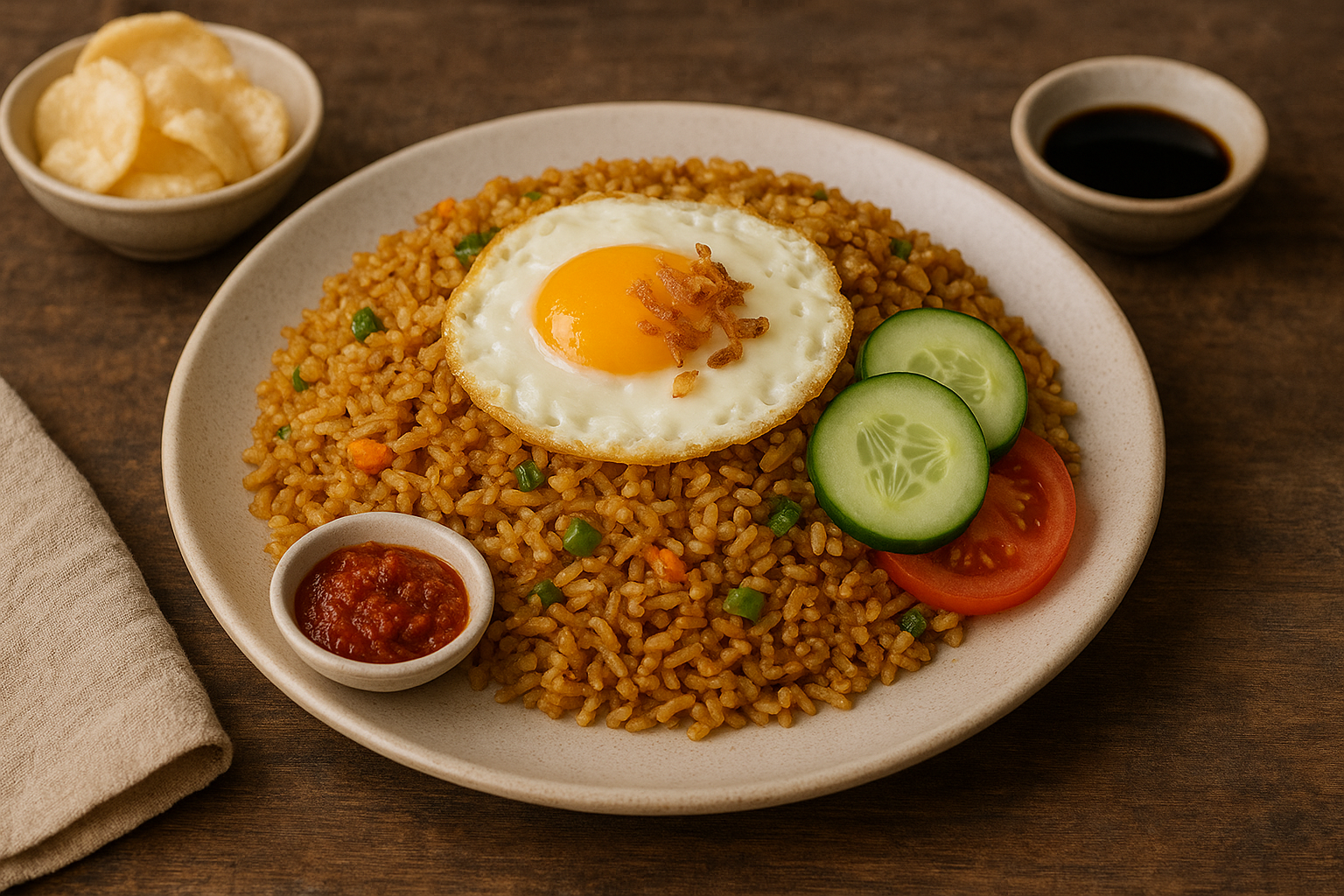
Unlike other Asian fried rice recipes, Indonesian Nasi Goreng often includes a fried egg on top, crispy shallots, and slices of cucumber or tomatoes for freshness. It’s quick, comforting, and perfect for busy weeknights.
Ingredients
- 3 cups cold, cooked rice (preferably a day old)
- 2 eggs
- 2 cloves garlic, minced
- 1 small shallot or onion, finely chopped
- 1 cup mixed vegetables (carrots, peas, corn, or cabbage)
- 2 tbsp kecap manis (sweet soy sauce)
- 1 tbsp regular soy sauce
- 1 tsp chili paste or sambal (optional for spice)
- 1 tbsp vegetable oil
- ½ cup cooked chicken, seafood, or tofu (optional)
- Salt and pepper to taste
- Fried shallots, cucumber, and tomato slices for garnish
Instructions
Step 1: Prepare the Rice
Use cold, day-old rice this keeps the grains separate and gives the dish that perfect fried texture. Break up any clumps before cooking.
Step 2: Build the Flavor Base
Heat oil in a wok or large skillet over medium-high heat. Add the minced garlic and shallots, and sauté until fragrant and golden. This step is key it creates the aromatic foundation for authentic Nasi Goreng.
Step 3: Add Protein and Vegetables
Add your choice of cooked chicken, seafood, or tofu, and stir-fry briefly. Then toss in the vegetables and cook for 2–3 minutes until slightly tender but still crisp.
Step 4: Stir-Fry the Rice
Add the rice to the pan and toss well with the ingredients. Pour in kecap manis, soy sauce, and sambal (if you like it spicy). Stir quickly to coat the rice evenly the heat will caramelize the sweet soy sauce and give it that dark, shiny color.
Step 5: Add the Eggs
Push the rice to one side of the wok, crack the eggs, and scramble them gently. Once cooked, mix them into the rice.
Step 6: Season and Serve
Adjust salt and pepper to taste. Transfer the fried rice to a plate and top with crispy shallots, cucumber, tomato slices, and a fried egg (telur mata sapi) for that classic Indonesian touch.
Serving Suggestions
Serve hot with:
- Prawn crackers (kerupuk)
- Sambal terasi (spicy chili paste)
- Pickled vegetables (acar)
For a complete Indonesian meal, pair Nasi Goreng with Satay, Tempeh Goreng, or Bakwan (vegetable fritters).
Cooking Tips
🔥 Use day-old rice – prevents mushiness.
🍳 High heat cooking – gives the rice a smoky “wok hei” flavor.
🥢 Don’t skip kecap manis – it’s the soul of Indonesian Nasi Goreng.
🌶️ Customize the spice – add sambal or chili for more heat.
🥩 Leftover meat works great – Nasi Goreng was born from creativity with leftovers.
Variations
- Nasi Goreng Jawa – Javanese-style with sweet soy and chili.
- Nasi Goreng Seafood – shrimp, squid, and fish sauce for ocean flavor.
- Nasi Goreng Kampung – rustic, spicy version with anchovies.
- Nasi Goreng Vegetarian – tofu and tempeh instead of meat.
Cultural Significance
In Indonesian culture, Nasi Goreng is more than just food it represents resourcefulness, comfort, and community. Families often cook it together, sharing stories late at night or preparing it for early breakfast.
A popular local saying goes:
“Tidak ada hari tanpa nasi goreng.”
There’s no day without fried rice.
From Jakarta to Yogyakarta, Nasi Goreng is a dish that connects people from street vendors and students to travelers exploring Indonesia for the first time.
Nasi Goreng is the heart of Indonesian cooking, simple yet full of depth and emotion. Every plate tells a story of family, culture, and tradition. Whether cooked in a home kitchen or a bustling street stall, its irresistible aroma always brings people together.