In today’s complex, fast-paced, and highly connected world, success is no longer determined solely by IQ, academic achievements, or technical expertise. Increasingly, emotional intelligence (EI) is recognized as a key factor that influences personal happiness, professional performance, leadership, and the quality of our relationships.
But what exactly is emotional intelligence, and why is it so crucial for modern life? This comprehensive guide will explore everything you need to know about EI, including its components, benefits, practical applications, and actionable strategies to improve it.
Understanding Emotional Intelligence
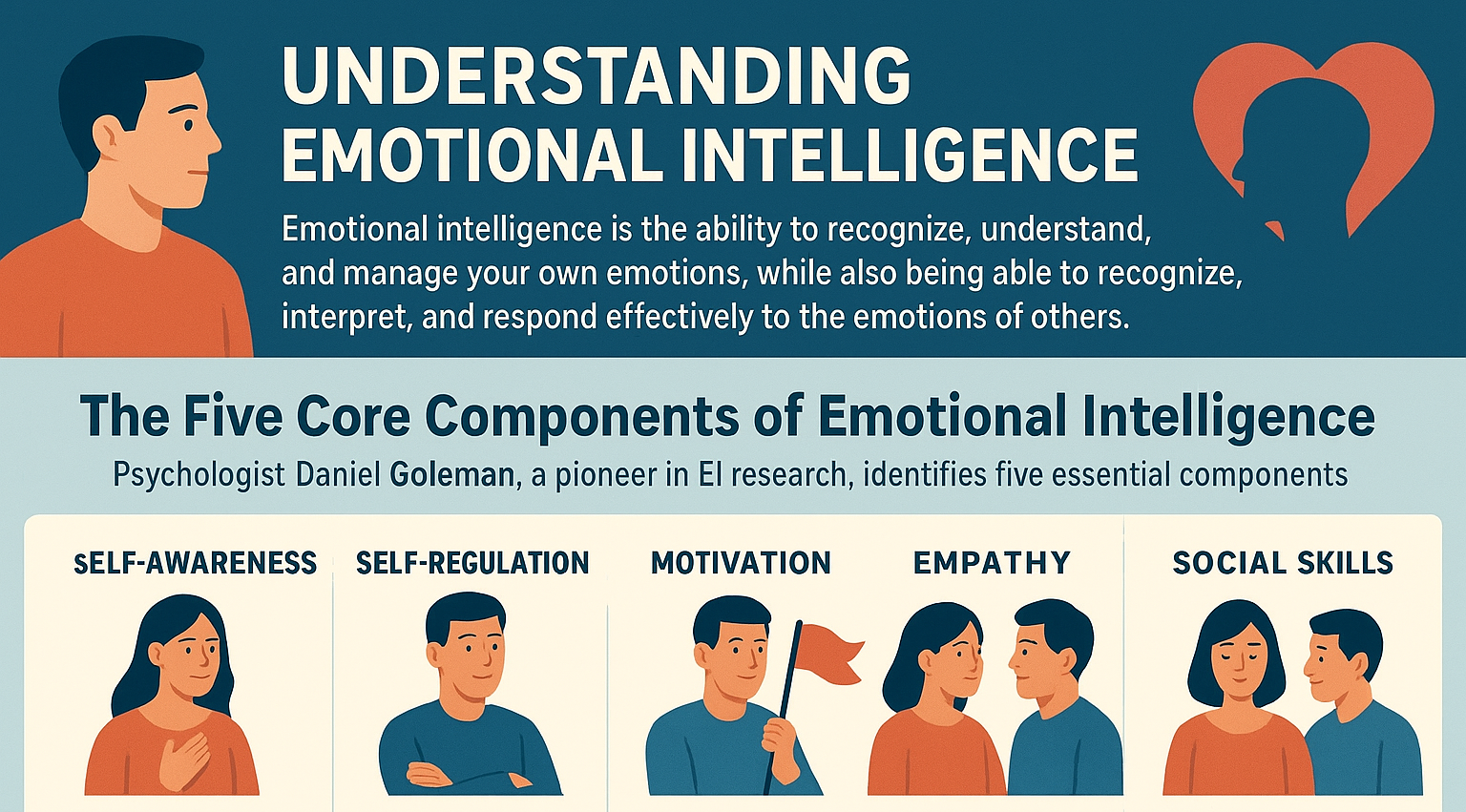
Emotional intelligence is the ability to recognize, understand, and manage your own emotions, while also being able to recognize, interpret, and respond effectively to the emotions of others.
Unlike traditional intelligence (IQ), which measures analytical and technical skills, EI focuses on how we handle ourselves, interact with others, and navigate social complexities.
Example: Two employees receive negative feedback from their manager. One reacts defensively, arguing back, while the other listens, processes the feedback, and develops an action plan for improvement. The difference lies in emotional intelligence.
EI Points:
- EI is learnable and improvable; it is not fixed at birth.
- EI affects decision-making, stress management, relationships, and career success.
- Developing EI enhances self-awareness, empathy, and leadership abilities.
The Five Core Components of Emotional Intelligence
Psychologist Daniel Goleman, a pioneer in EI research, identifies five essential components:
1. Self-Awareness
- Definition: Understanding your emotions, triggers, strengths, and weaknesses.
- Importance: Self-awareness is the foundation of EI because you cannot manage what you don’t recognize.
- Signs of High Self-Awareness:
- Recognizes emotional triggers.
- Understands how emotions affect decisions.
- Can identify personal strengths and weaknesses.
- Practical Example: Sarah notices she becomes impatient during team meetings. Recognizing this allows her to pause, breathe, and respond calmly rather than snapping.
- Tips to Improve:
- Keep a daily emotion journal.
- Reflect on emotional reactions at the end of each day.
- Ask for feedback from trusted friends or colleagues.
2. Self-Regulation
- Definition: Managing emotions, controlling impulses, and responding thoughtfully rather than reacting.
- Importance: Self-regulation reduces conflicts, promotes professionalism, and builds trust.
- Signs of High Self-Regulation:
- Stays calm under pressure.
- Avoids impulsive decisions.
- Demonstrates resilience in challenging situations.
- Example: During a heated meeting, John practices self-regulation by pausing, listening, and responding calmly instead of yelling.
- Tips to Improve:
- Practice mindfulness and meditation daily.
- Use pause-and-breathe techniques before responding.
- Identify common triggers and plan alternative reactions.
3. Motivation
- Definition: Inner drive to achieve goals for personal satisfaction rather than external rewards.
- Importance: Motivated individuals are persistent, resilient, and achieve long-term goals.
- Signs of High Motivation:
- Sets clear personal goals and works consistently.
- Maintains optimism despite setbacks.
- Seeks challenges as opportunities for growth.
- Example: Emma continues learning new skills despite initial failures because she values personal growth over external recognition.
- Tips to Improve:
- Set SMART goals (Specific, Measurable, Achievable, Relevant, Time-bound).
- Celebrate small achievements to maintain motivation.
- Surround yourself with inspiring, goal-oriented people.
4. Empathy
- Definition: Understanding and sharing the feelings of others.
- Importance: Empathy enhances communication, strengthens relationships, and fosters trust.
- Signs of High Empathy:
- Notices emotional cues without verbal explanation.
- Responds with compassion and understanding.
- Can put themselves in someone else’s shoes.
- Example: A manager notices an employee is unusually quiet and stressed, offering support rather than criticism.
- Tips to Improve:
- Active listening: Focus fully on the speaker.
- Ask open-ended questions to understand feelings.
- Practice perspective-taking exercises to imagine others’ experiences.
5. Social Skills
- Definition: The ability to communicate effectively, build healthy relationships, and manage conflicts.
- Importance: Social skills enable collaboration, leadership, and influence.
- Signs of Strong Social Skills:
- Resolves conflicts calmly.
- Maintains positive relationships.
- Communicates clearly and respectfully.
- Example: Maria mediates a disagreement between two colleagues, ensuring both feel heard and respected.
- Tips to Improve:
- Practice assertive communication without aggression.
- Build rapport through empathy and active listening.
- Seek feedback on your communication style.
Why Emotional Intelligence Matters
1. Career Success
Research indicates that EI often predicts professional success better than IQ. Employees with high EI excel in leadership, teamwork, negotiation, and customer relations.
Example: A project manager with high EI resolves conflicts efficiently, motivates the team, and ensures deadlines are met, creating a positive work environment.
2. Better Relationships
EI enhances communication, understanding, and empathy, leading to stronger personal and professional relationships.
Example: In personal relationships, someone with high EI can listen without judgment, validate feelings, and respond with empathy rather than defensiveness.
3. Stress Management
Awareness and regulation of emotions help manage stress, improving mental health and resilience.
Example: During unexpected changes at work, an emotionally intelligent employee practices mindfulness instead of panicking.
4. Personal Growth
High EI fosters self-awareness, adaptability, and continuous improvement, supporting personal development and well-being.
Example: Reflecting on past emotional reactions allows individuals to improve future behavior.
5. Leadership and Influence
Leaders with high EI inspire trust, empathy, and respect, enabling better team performance.
Example: A CEO listens to employee concerns and aligns company goals with team needs, improving engagement and retention.
Real-Life Applications of Emotional Intelligence
In the Workplace
- Resolving conflicts calmly and fairly.
- Leading teams with empathy.
- Negotiating effectively with clients by reading emotional cues.
In Education
- Teachers use EI to understand students’ emotional needs, improving learning outcomes.
- Students with EI manage stress during exams and collaborate better with peers.
In Personal Life
- Recognizing a partner’s stress and offering support.
- Listening actively to family members.
- Managing emotions during family disagreements.
Case Study:
John, a team leader, noticed frequent arguments in his team. Using EI (active listening, empathy, and mediation), he resolved conflicts, improved communication, and increased productivity within three months.
How to Improve Your Emotional Intelligence: Step-by-Step
Step 1: Practice Self-Reflection
- Keep a daily emotion journal.
- Reflect on emotional triggers and responses.
- Review patterns weekly to identify improvement areas.
Step 2: Cultivate Active Listening
- Focus fully on conversations without interrupting.
- Observe tone, body language, and context.
- Repeat or summarize to confirm understanding.
Step 3: Manage Stress Effectively
- Use meditation, yoga, or breathing exercises.
- Take breaks during high-pressure situations.
- Practice visualization to reduce anxiety.
Step 4: Develop Empathy
- Imagine other people’s perspectives.
- Respond to emotions with understanding, not judgment.
- Volunteer or engage in community activities to broaden emotional understanding.
Step 5: Enhance Communication
- Use “I feel” statements to express emotions.
- Practice giving and receiving feedback constructively.
- Build assertiveness without aggression.
Step 6: Seek Feedback and Continuous Learning
- Ask mentors or peers for feedback on EI strengths and weaknesses.
- Take online EI assessments or workshops.
- Read books, watch talks, and practice skills consistently.
Emotional Intelligence in Various Life Domains
Workplace
- Improves collaboration, leadership, and team cohesion.
- Enhances productivity and workplace satisfaction.
Relationships
- Strengthens empathy, trust, and communication.
- Reduces misunderstandings and strengthens bonds.
Personal Growth
- Fosters resilience, adaptability, and lifelong learning.
- Promotes mindfulness and reflective thinking.
Health and Well-Being
- Reduces stress, anxiety, and emotional burnout.
- Supports emotional balance and mental clarity.
Tools and Resources for Developing Emotional Intelligence
- Books:
- Emotional Intelligence by Daniel Goleman
- The EQ Edge by Steven J. Stein & Howard E. Book
- Emotional Intelligence 2.0 by Travis Bradberry & Jean Greaves
- Online Courses:
- Coursera, Udemy, LinkedIn Learning
- Assessments:
- EQ-i 2.0 (Emotional Quotient Inventory)
- MSCEIT (Mayer-Salovey-Caruso Emotional Intelligence Test)
- Apps & Tools:
- Headspace, Calm for mindfulness
- Journaling apps like Daylio or Reflectly
Final Thoughts
Emotional intelligence is a critical skill for success, happiness, and personal growth.
By developing EI, you can:
- Build stronger personal and professional relationships
- Improve career performance and leadership skills
- Manage stress and emotions effectively
- Foster personal growth and resilience
EI is learnable and improvable. By observing your emotions, practicing empathy, communicating effectively, and reflecting on your responses, you can create profound positive changes in your life.