Origin: Indonesia
Servings: 4–6
Prep Time: 25 minutes
Cooking Time: 15 minutes
Difficulty: Easy
History of Satay
Most culinary historians agree that satay originated on the island of Java, particularly in the regions of Madura and Ponorogo in Indonesia. The word “sate” or “satay” is believed to come from the Tamil word “catai”, meaning grilled meat on skewers. However, the version we know today complete with sweet soy sauce, peanuts, and local spices developed entirely in Indonesia.
Satay likely appeared in the 18th or 19th century, when Muslim traders from Arabia, Gujarat, and India arrived in the Indonesian archipelago. They brought with them the tradition of grilling meat similar to kebabs. Local Indonesians quickly adapted this technique using native ingredients such as kecap manis (sweet soy sauce), palm sugar, and ground peanuts giving birth to the uniquely Indonesian flavor profile of satay.
Because it is simple to prepare and adaptable to many types of protein chicken, goat, beef, fish, or even tofu and tempeh, satay quickly spread across Indonesia. Each region developed its own unique version, characterized by distinct marinades, sauces, and serving styles:
- Sate Madura – Chicken satay with sweet peanut sauce and soy glaze, popular nationwide.
- Sate Padang – From West Sumatra, made with beef and a rich, spicy turmeric sauce.
- Sate Lilit Bali – From Bali, using minced fish or chicken wrapped around lemongrass sticks.
- Sate Kambing – Grilled lamb satay often served during Eid al-Adha and family celebrations.
During the Dutch colonial period, satay was introduced to Europe and beyond. Today, it is widely enjoyed not only in Indonesia but also in the Netherlands, Malaysia, and Singapore, where it has become a true Southeast Asian street food icon, smoky, savory, sweet, and utterly satisfying. Yet, its historical roots remain firmly planted in Java, Indonesia the birthplace of authentic satay.
About the Dish
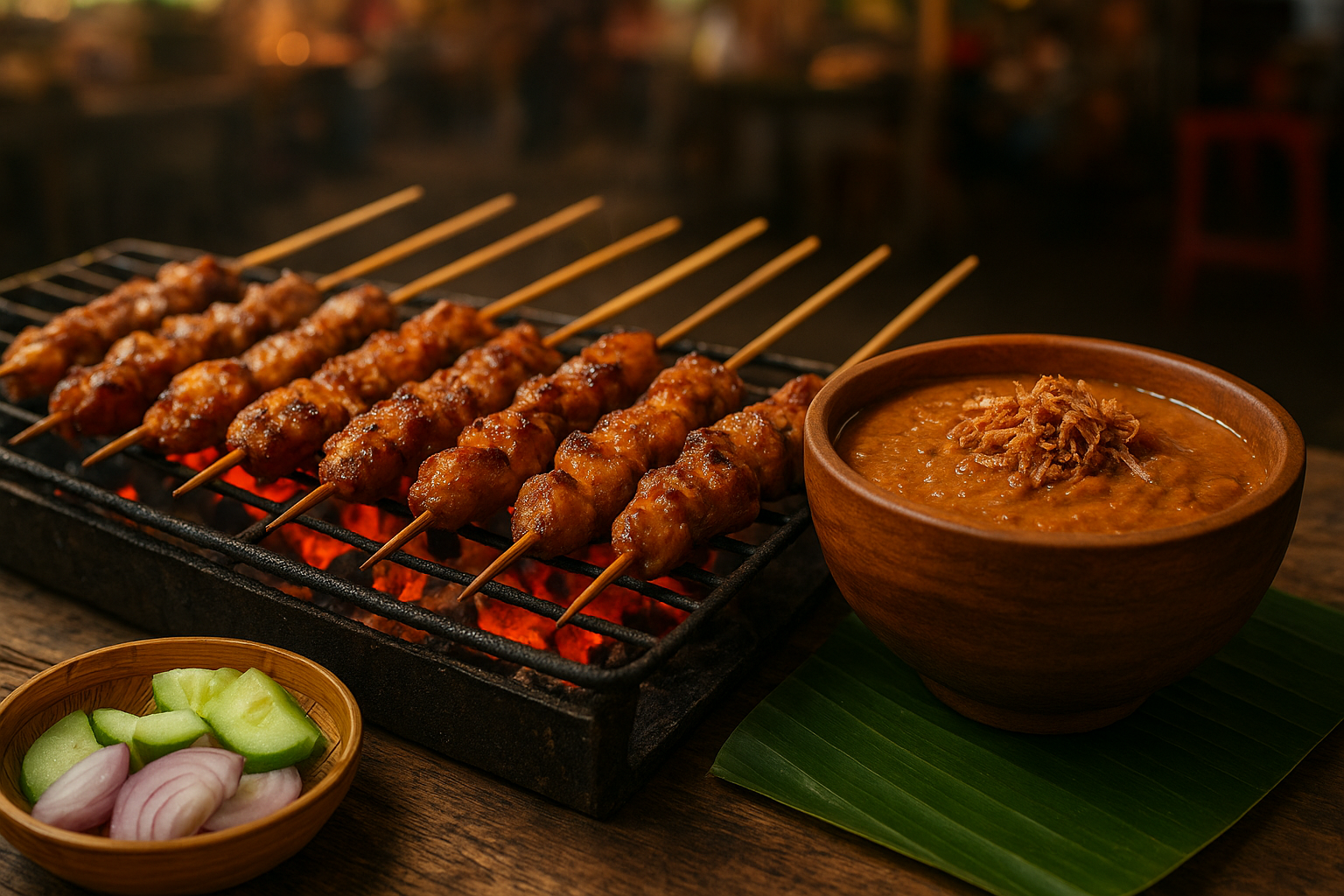
Satay is typically made from small pieces of marinated meat, chicken, beef, lamb, or fish skewered on bamboo sticks, then grilled to perfection over charcoal. The key lies in the marinade, which combines sweet soy sauce (kecap manis), garlic, shallots, and spices, creating a deep, caramelized flavor.
The dish is incomplete without its iconic peanut sauce a creamy, savory, slightly sweet sauce that balances the smoky taste of the meat. Combined, they create one of Indonesia’s most unforgettable street food experiences.
Ingredients
For the Satay
- 500 g chicken breast or thigh, cut into cubes
- 2 cloves garlic, minced
- 2 shallots, finely chopped
- 3 tablespoons sweet soy sauce (kecap manis)
- 1 tablespoon lime juice
- 1 tablespoon vegetable oil
- 1 teaspoon coriander powder
- Salt and pepper to taste
- Bamboo skewers (soaked in water for 30 minutes)
For the Peanut Sauce
- 150 g roasted peanuts
- 2 cloves garlic
- 2 red chilies (adjust to taste)
- 2 tablespoons palm sugar (or brown sugar)
- 2 tablespoons sweet soy sauce (kecap manis)
- 1 tablespoon tamarind water or lime juice
- 200 ml coconut milk or water
- Salt to taste
Instructions
Step 1: Prepare the Marinade
- In a bowl, mix garlic, shallots, coriander, sweet soy sauce, lime juice, oil, salt, and pepper.
- Add the chicken and coat evenly.
- Cover and marinate for at least 30 minutes (or up to 2 hours for deeper flavor).
Step 2: Make the Peanut Sauce
- Blend roasted peanuts, garlic, chilies, sugar, and a bit of water until smooth.
- Pour the mixture into a saucepan. Add sweet soy sauce, tamarind water, and coconut milk.
- Simmer over low heat, stirring constantly until thick and creamy.
- Adjust seasoning with salt and sugar as needed.
Step 3: Skewer and Grill
- Thread the marinated chicken onto the soaked bamboo skewers.
- Grill over charcoal or a grill pan, brushing occasionally with leftover marinade.
- Cook for about 10–15 minutes, turning often until lightly charred and caramelized.
Step 4: Serve
- Arrange satay on a plate and drizzle with peanut sauce, or serve the sauce on the side.
- Garnish with fried shallots and a drizzle of sweet soy sauce.
Serving Suggestions
Serve satay with:
- Steamed rice or lontong (compressed rice cakes)
- Fresh cucumber and shallot slices
- Sambal (spicy chili paste)
- A squeeze of lime for brightness
Cooking Tips
🔥 Soak the skewers to prevent burning.
🌶️ Adjust chilies based on your spice tolerance.
🥩 Marinate longer for maximum flavor.
🥥 Use coconut milk for a creamy, authentic peanut sauce.
🔥 Grill over charcoal for true Indonesian street flavor.
Variations
- Sate Ayam Madura – Chicken satay with sweet peanut sauce.
- Sate Padang – Spicy beef satay with turmeric sauce.
- Sate Lilit Bali – Minced fish satay wrapped on lemongrass.
- Sate Kambing – Grilled lamb satay with soy dressing.
- Vegetarian Satay – Tofu or tempeh skewers with peanut sauce.
Cultural Significance
Satay is deeply woven into Indonesian street food culture. Whether grilled at night markets, family events, or roadside stalls, it symbolizes warmth, community, and celebration. Each sizzling skewer tells a story of flavor and tradition smoky, nutty, and sweet all at once.
As Indonesians say:
“Sate adalah makanan sejuta umat.”
(“Satay is the food for everyone.”)
From Java to Bali, from street vendors to fine dining, satay remains a dish that unites people, simple, flavorful, and proudly Indonesian.