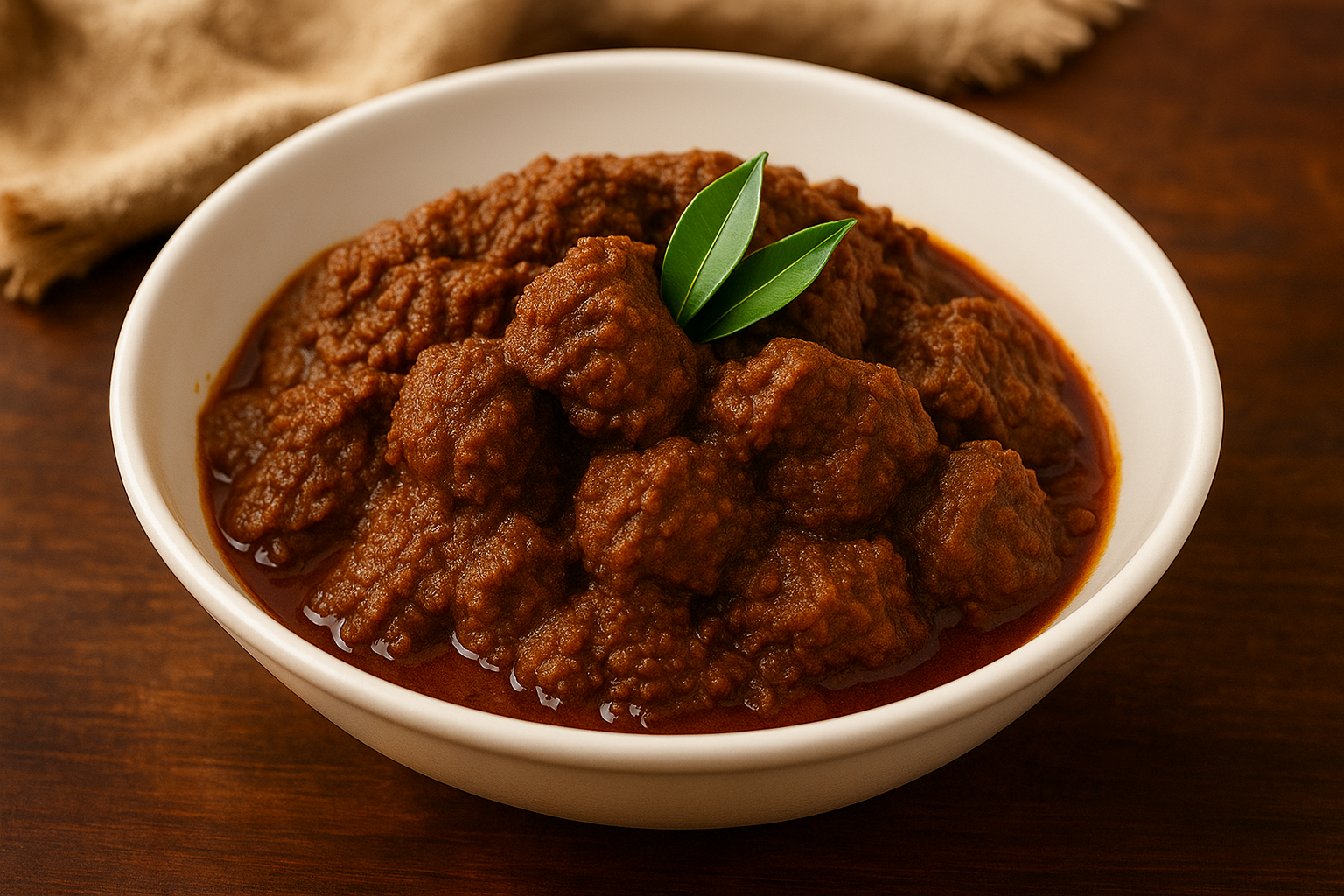
Origin: West Sumatra, Indonesia
Servings: 6-8
Prep Time: 30 minutes
Cooking Time: 3-4 hours
Difficulty: Moderate
History of Rendang
Rendang is one of Indonesia’s most iconic and treasured dishes, originating from the Minangkabau people of West Sumatra. The word “rendang” comes from the Minangkabau term “marandang”, which means slowly cooking food until dry. This reflects the traditional way rendang is prepared beef simmered for hours in coconut milk and a fragrant blend of spices until it becomes dark, caramelized, and deeply flavorful.
Historically, Rendang was developed as a way to preserve meat for long journeys through the tropical climate of Sumatra. Before refrigeration existed, the Minangkabau people discovered that cooking meat slowly for hours in coconut milk and spices allowed it to last for weeks even months, because the rich mixture of spices acted as natural preservatives.
Rendang soon became more than just food. It evolved into a symbol of Minangkabau culture and identity, representing patience, wisdom, and community. Traditionally, Rendang is served at important events such as:
- Weddings and ceremonies – symbolizing honor and unity
- Religious holidays (Eid al-Fitr, Eid al-Adha) – celebrating abundance
- Festivals and family gatherings – signifying love and respect
In 2011 and again in 2017, CNN International named Rendang the world’s most delicious food, making it a true symbol of Indonesia’s culinary excellence.
Today, Rendang is enjoyed all over the world, featured in restaurants from Jakarta to London, and even praised by celebrity chefs like Gordon Ramsay. In 2021, UNESCO recognized Indonesian cuisine, including Rendang, as part of the country’s intangible cultural heritage.
About the Dish
Rendang is not a curry, but rather a dry, slow-cooked stew where beef is gently simmered in coconut milk and an aromatic blend of spices until all liquid evaporates, leaving the meat coated in a rich, dark, caramelized sauce.
There are three known stages of Rendang:
- Gulai – still saucy and yellowish
- Kalio – semi-dry, light brown, thicker sauce
- Rendang – completely dry, dark brown, rich in flavor and aroma
Traditional Minangkabau cooks only stop when the meat reaches the third stage, the true rendang.
Ingredients
- 1 kg (2.2 lbs) beef (preferably chuck, brisket, or shank), cut into large cubes (5–6 cm)
- 1.5 liters thick coconut milk (from 3–4 coconuts, or full-fat canned equivalent)
- 2 cups thin coconut milk (optional, for initial boiling)
- 4 kaffir lime leaves
- 2 turmeric leaves (optional, authentic Minang touch)
- 2 lemongrass stalks, bruised
- 3 cm galangal, sliced and bruised
- 2 tamarind slices (asam kandis), or 1 tbsp tamarind paste
- 1 tsp salt (adjust later)
- 1 tsp palm sugar (gula merah), or brown sugar
Spice Paste (Rempah Halus)
Grind all the following into a smooth paste (traditionally using a mortar and pestle):
- 12 shallots
- 6 cloves garlic
- 10–15 red chilies (adjust to taste)
- 5 candlenuts (kemiri), toasted
- 3 cm fresh ginger
- 5 cm galangal
- 3 cm turmeric root (or 1½ tsp ground turmeric)
- 1 tbsp coriander seeds, roasted
- 1 tsp cumin seeds, roasted
Instructions
Step 1: Prepare the Spice Paste
Blend or pound all ingredients until smooth. The aroma of fresh galangal, lemongrass, and turmeric is key to the authentic flavor.
Step 2: Cook the Spice Paste
Heat 3 tablespoons of coconut oil in a large heavy pot.
Add the spice paste and cook on medium heat for 7–10 minutes until it smells good and oily.
Step 3: Add Aromatics and Meat
Add lemongrass, galangal slices, kaffir lime leaves, and turmeric leaves.
Stir in the beef cubes and coat them evenly with the spices.
Step 4: Pour in Coconut Milk
Slowly pour in the thick coconut milk, stirring continuously to avoid curdling.
Bring to a gentle boil, then reduce to a simmer.
Step 5: Season and Slow Cook
Add tamarind, salt, and palm sugar.
Let the mixture simmer uncovered for 3–4 hours, stirring occasionally.
The sauce will thicken, darken, and eventually release its oil (santan pecah minyak).
Step 6: Reduce Until Dry
Continue cooking until the meat becomes dark brown and coated with thick, aromatic oil.
This is the defining stage of true rendang.
Step 7: Rest and Serve
Let the rendang rest for 15–20 minutes before serving to allow flavors to deepen.
Serving Suggestions
- Serve with steamed white rice, nasi kunyit (turmeric rice), or lemang (bamboo-cooked glutinous rice).
- Complement with sambal ijo (green chili sambal) or sayur nangka (young jackfruit curry).
- A traditional Padang feast (hidangan nasi Padang) often includes rendang as the star dish among many smaller side dishes.
Cooking Tips
- Use fresh coconut milk for authentic flavor — the oil separation process defines real rendang.
- Never rush the cooking. Slow simmering is essential for the complex caramelization that gives rendang its depth.
- Rendang keeps well — in fact, it tastes even better the next day. It can last up to a week refrigerated or longer if frozen.
- For travelers, the Minangkabau historically cooked rendang until completely dry so it could last for weeks without spoiling — an ancient preservation technique.
Cultural Significance
In Minangkabau culture, Rendang represents:
- Patience – through the long, slow cooking process
- Wisdom – in balancing spices and timing
- Respect – it’s served to honor guests and family
- Unity – as it is often prepared together in community gatherings
A local proverb says:
“Rendang dimasak dengan sabar, sebagaimana kesabaran seorang ibu terhadap keluarganya.”
“Rendang is cooked with patience, like a mother’s patience for her family.”