Explore Indonesia’s top destinations in 2025 with a complete guide. Discover beaches, volcanoes, cultural gems, hidden islands, festivals, local cuisine, and travel tips for an unforgettable adventure.
Introduction
Indonesia, a vast archipelago of over 17,000 islands, is a treasure trove of natural wonders, ancient cultures, and diverse ecosystems. From tropical beaches to lush jungles, volcanic landscapes, and vibrant cities, the country caters to every type of traveler.
This comprehensive 2025 guide provides must-visit destinations, including detailed historical background, cultural highlights, practical tips, local cuisine, adventure activities, photography advice, and sustainable tourism suggestions. Whether you are a solo traveler, family, adventure seeker, or culture enthusiast, this guide helps you plan the ultimate Indonesian journey.
1. Bali – The Island of Gods.
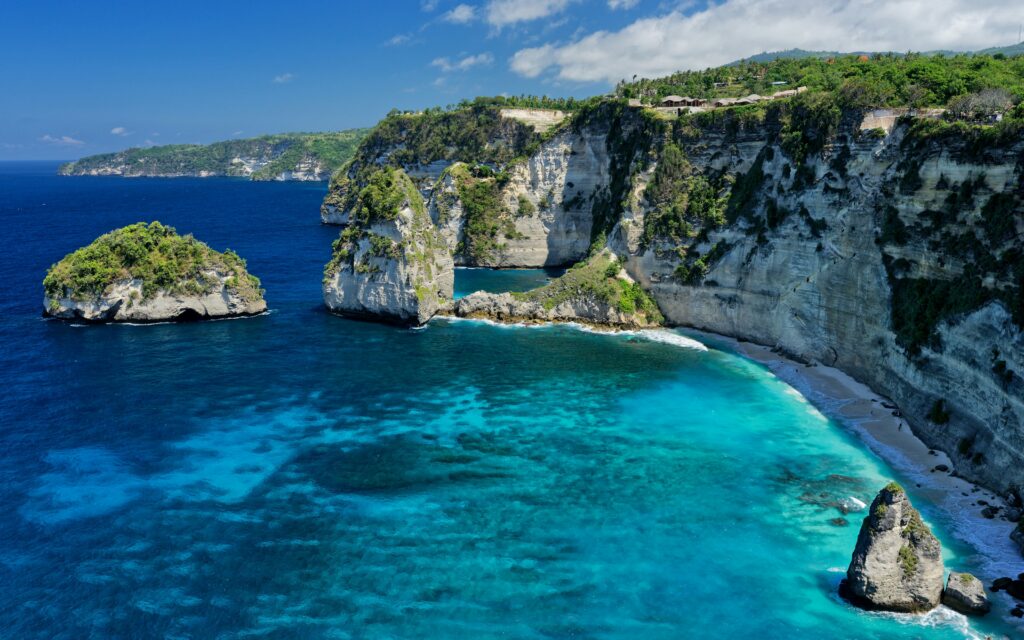
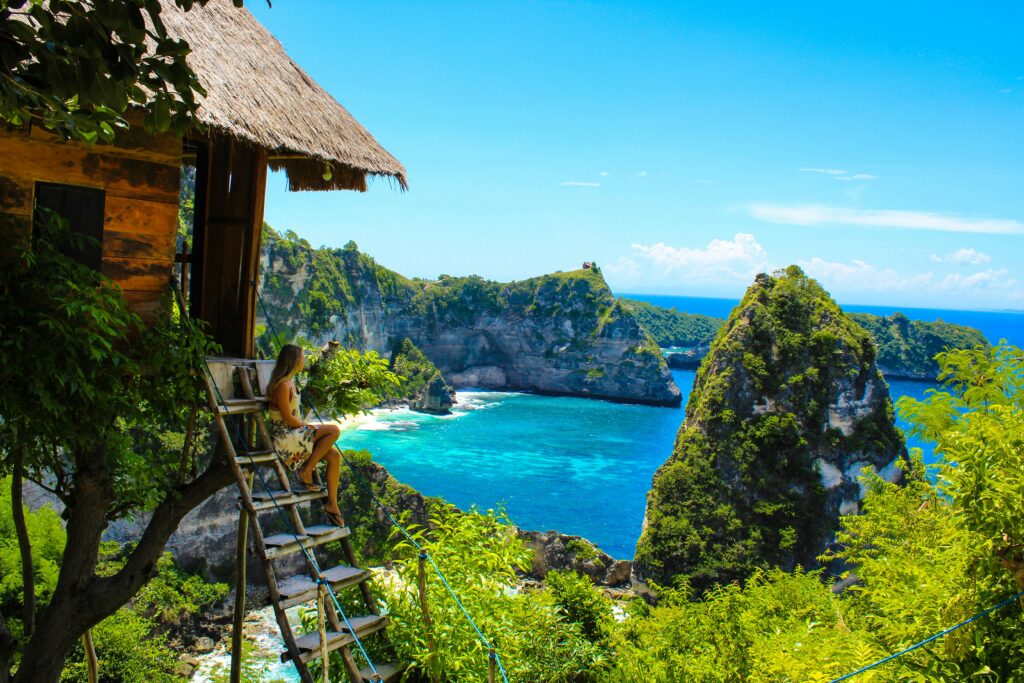
Bali, Indonesia’s most famous island, is renowned for its stunning beaches, volcanic landscapes, lush rice terraces, vibrant nightlife, and rich spiritual culture. It’s ideal for travelers seeking a mix of adventure, relaxation, and cultural experiences.
Top Attractions & Experiences:
- Uluwatu Temple & Kecak Fire Dance:
- Built in the 11th century on a cliff overlooking the ocean.
- Evening Kecak Fire Dance performance with sunset views.
- Perfect for photography with dramatic coastal backdrops.
- Ubud Monkey Forest:
- Sacred forest sanctuary with over 700 macaques.
- Explore ancient statues, temples, and lush jungle paths.
- Guided tours provide insights into forest ecology and local legends.
- Tegallalang Rice Terraces:
- Iconic rice terraces with traditional subak irrigation system.
- Cycling and walking tours through terraces and nearby art villages.
- Best visited early morning for misty landscapes.
- Mount Batur Sunrise Trek:
- Active volcano offering sunrise views over Batur Lake.
- Trek duration: 2–3 hours; include guides and light breakfast.
- Hot springs nearby for post-trek relaxation.
- Nusa Penida & Nusa Lembongan:
- Cliff views at Kelingking Beach, Angel’s Billabong, Broken Beach.
- Snorkeling, diving, and coastal exploration.
- Less crowded spots for photography away from main tourist areas.
- Seminyak & Canggu Beaches:
- Surfing, yoga, beach clubs, and vibrant nightlife.
- Sunset photography and casual dining along beachfront cafes.
Cultural & Historical Insights:
- Balinese Hinduism influences daily life; offerings (canang sari) are placed everywhere.
- Traditional villages like Penglipuran showcase preserved Balinese architecture.
- Participate in festivals like Galungan and Nyepi (Day of Silence) for authentic experiences.
Local Cuisine:
- Babi Guling: Roast pig with Balinese spices.
- Lawar: Mixed vegetables with coconut and minced meat.
- Nasi Campur: Rice with assorted small dishes.
- Jaje Bali: Traditional Balinese snacks.
Accommodation Options:
- Budget: Hostels in Ubud ($10–$25/night)
- Mid-range: Boutique hotels and villas ($50–$120/night)
- Luxury: Cliff villas or beachfront resorts ($200+/night)
Travel Tips:
- Best season: April–October (dry season).
- Transportation: Scooter rental for short trips; hire private drivers for full-day tours.
- Photography Tips: Sunrise at Mount Batur, sunset at Uluwatu, drone shots over Tegallalang.
- Sustainable Tourism: Avoid single-use plastics; support local businesses.
2. Yogyakarta – Cultural Heart of Java.
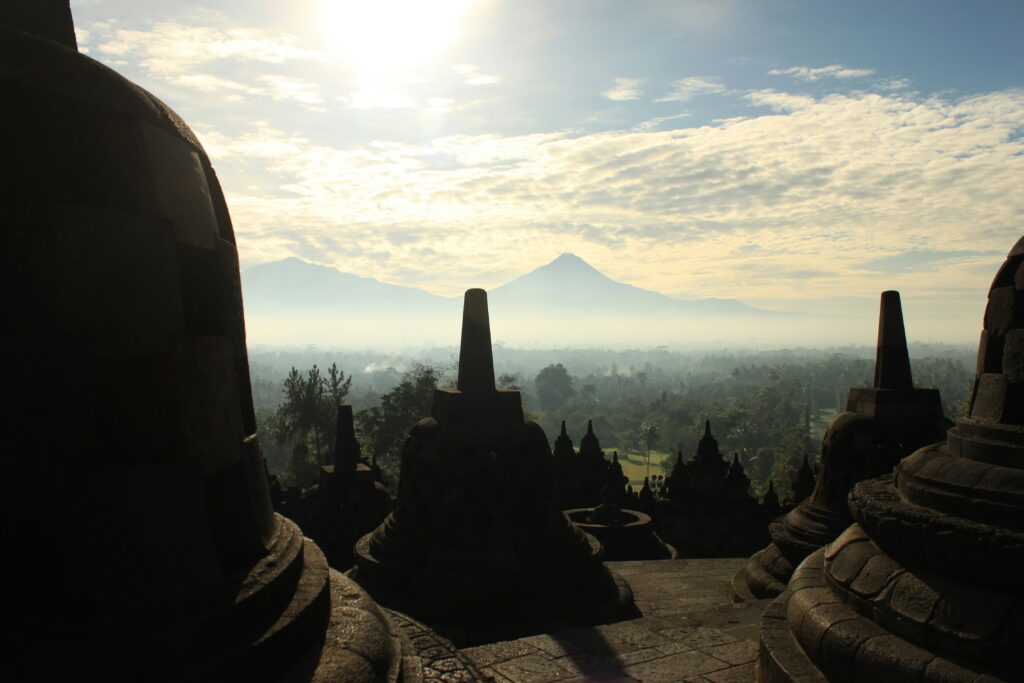
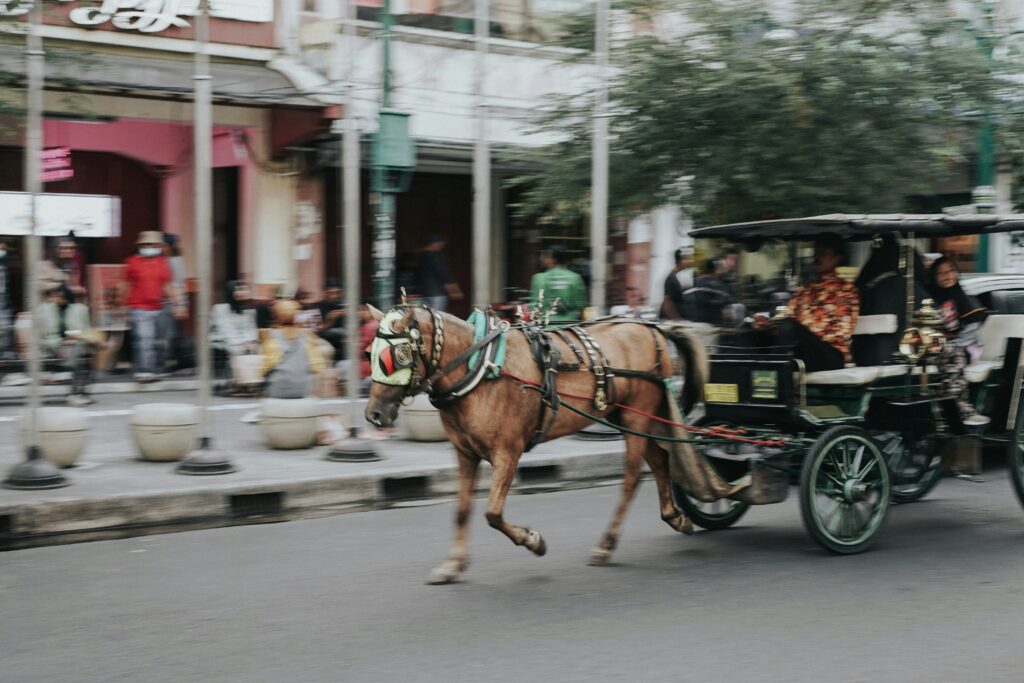
Yogyakarta, the cultural capital of Java, is famous for ancient temples, lively arts, traditional crafts, and bustling street life. Perfect for history lovers and cultural explorers.
Top Attractions & Experiences:
- Borobudur Temple:
- 9th-century Buddhist temple and UNESCO World Heritage site.
- Sunrise tours for mystical landscapes and photography.
- Learn about intricate relief panels depicting Buddha’s life.
- Prambanan Temple:
- Largest Hindu temple complex in Indonesia.
- Evening Ramayana ballet performances offer cultural storytelling.
- Malioboro Street:
- Famous shopping hub for batik, souvenirs, and street food.
- Ideal for walking tours and local market exploration.
- Keraton Yogyakarta:
- Sultan’s palace showcasing Javanese architecture, gamelan music, and shadow puppetry.
- Participate in cultural workshops and traditional performances.
- Taman Sari Water Castle:
- Royal garden with pools, underground tunnels, and historic architecture.
- Mount Merapi Lava Tour:
- Explore volcanic landscapes shaped by past eruptions.
- Guided tours provide safety and historical context.
Cultural & Historical Insights:
- Yogyakarta preserves Javanese traditions and arts, including batik-making and silver crafting.
- Festivals like Sekaten celebrate music, culture, and religious traditions.
Local Cuisine:
- Gudeg: Sweet young jackfruit stew with rice and chicken.
- Bakpia Pathok: Sweet pastries filled with mung beans.
- Ayam Goreng Kalasan: Fried chicken with local spices.
- Street food options: satay, nasi goreng, fried tempeh.
Accommodation Options:
- Budget: Homestays and hostels ($10–$25/night)
- Mid-range: Boutique hotels ($40–$80/night)
- Luxury: Heritage hotels near Keraton ($100+/night)
Travel Tips:
- Best season: May–September.
- Transportation: Rent scooters or pedicabs (becak) for short distances.
- Photography Tips: Sunrise at Borobudur, sunset at Prambanan, night street photography at Malioboro.
- Sustainable Tourism: Respect temple rules and local customs.
3. Komodo National Park – Home of the Komodo Dragons.

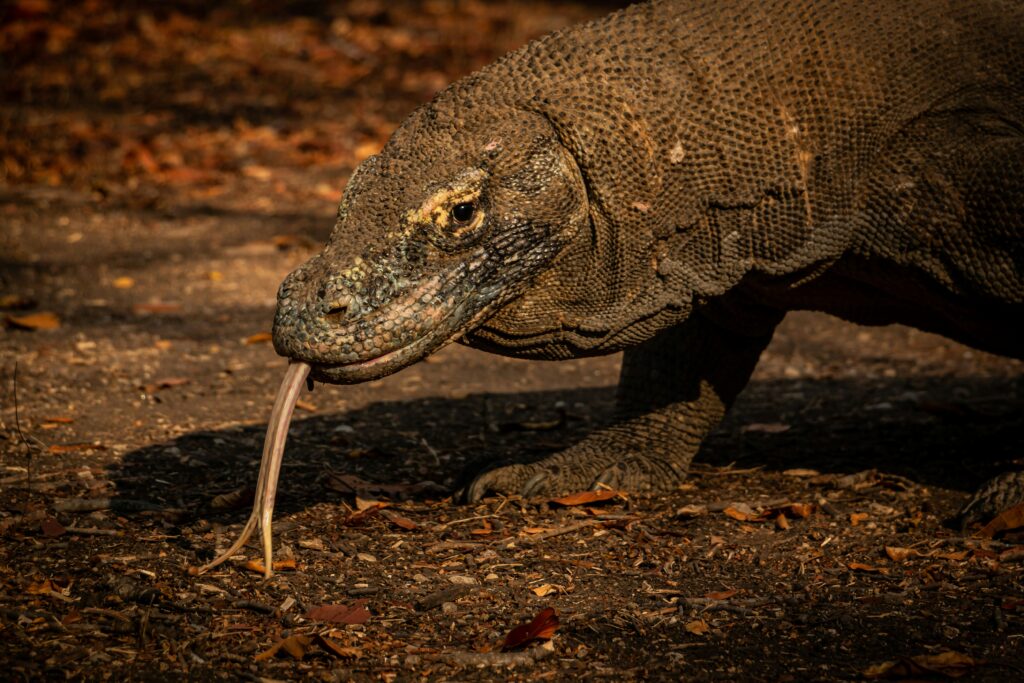
Komodo National Park is renowned for Komodo dragons, pristine islands, and diverse marine life, ideal for adventure travelers and wildlife enthusiasts.
Top Attractions & Experiences:
- Komodo & Rinca Islands:
- Safely observe Komodo dragons with local rangers.
- Learn about dragon behavior and conservation.
- Padar Island:
- Moderate hike to panoramic views of beaches and coastline.
- Excellent spot for sunrise and drone photography.
- Pink Beach:
- Rare pink sand beach perfect for snorkeling and swimming.
- Diving & Snorkeling:
- Explore vibrant coral reefs with manta rays, reef sharks, and tropical fish.
- Sunset Cruises:
- Multi-island tours ideal for photography and spotting dolphins.
- Adventure Options:
- Kayaking, island-hopping, and camping in designated areas.
Cultural & Historical Insights:
- Indigenous communities preserve traditional lifestyles while engaging in tourism.
- The park was established in 1980 to protect endangered species and marine ecosystems.
Local Cuisine:
- Fresh seafood: grilled fish, shrimp, octopus.
- Local spice-based sauces highlight Indonesian flavors.
Accommodation Options:
- Budget: Hostels and guesthouses in Labuan Bajo ($15–$30/night)
- Mid-range: Hotels with basic amenities ($50–$120/night)
- Luxury: Liveaboard tours including accommodations ($150–$400/day)
Travel Tips:
- Best season: April–December.
- Transportation: Liveaboard boats recommended; day trips from Labuan Bajo also available.
- Photography Tips: Early morning for Komodo dragons; underwater photography at Pink Beach.
- Sustainable Tourism: Avoid feeding wildlife; use reef-safe sunscreen.
4. Raja Ampat – Paradise for Divers.
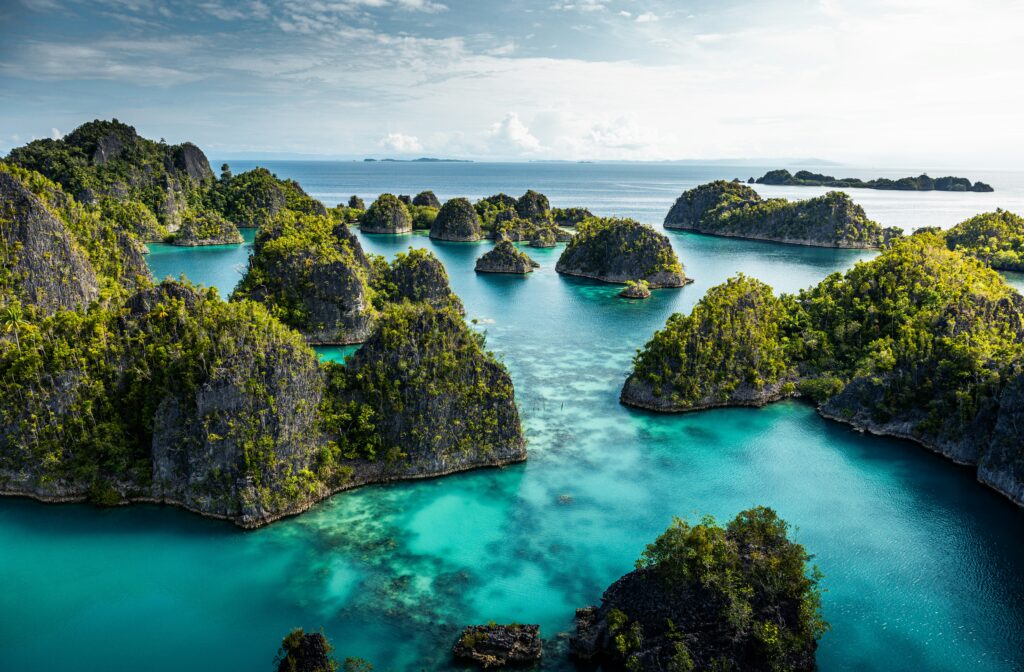
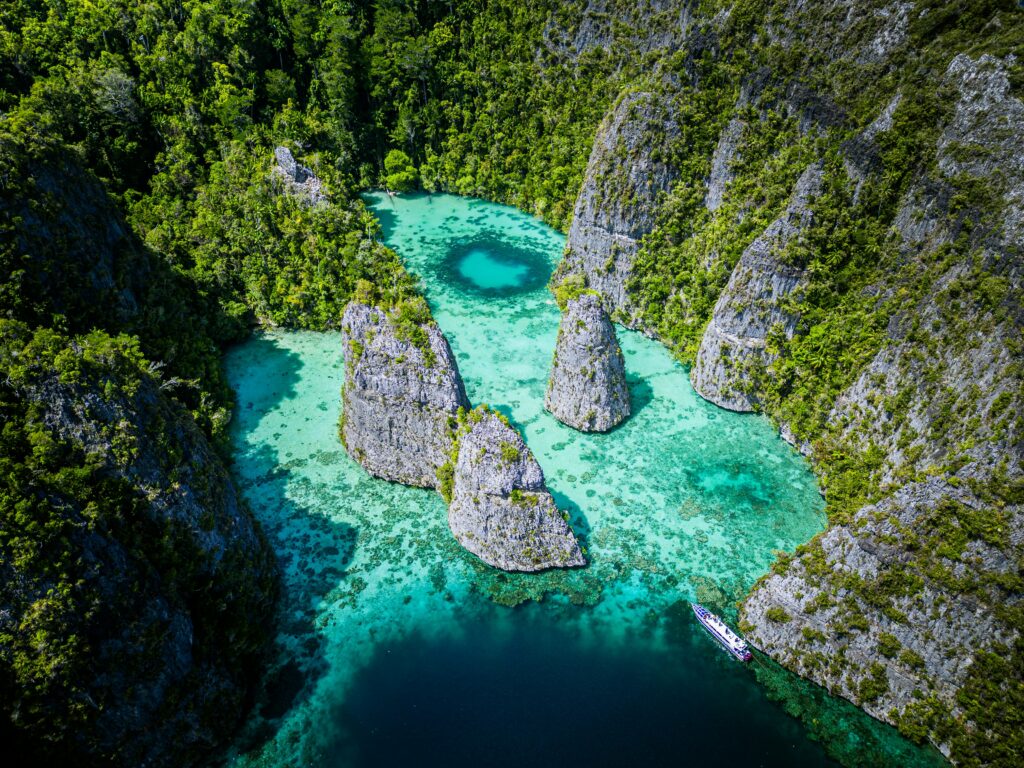
Raja Ampat, in West Papua, is one of the most biodiverse marine ecosystems on Earth, perfect for divers, nature enthusiasts, and photographers.
Top Attractions & Experiences:
- Piaynemo Viewpoint:
- Short hike to panoramic limestone karst island views.
- Best early morning for clear skies and photography.
- Wayag Islands:
- Iconic karst formations ideal for drone and boat photography.
- Misool Islands:
- Coral reefs, eco-resorts, snorkeling, and diving.
- Arborek Village:
- Learn about Papuan community life, traditional weaving, and sustainable fishing.
- Diving Sites:
- Spot manta rays, reef sharks, and vibrant coral species.
- Kayaking & Paddleboarding:
- Explore calm lagoons and mangrove areas.
Cultural & Historical Insights:
- Papuan communities maintain centuries-old traditions in fishing, weaving, and storytelling.
- Eco-tourism initiatives promote conservation and cultural preservation.
Local Cuisine:
- Fresh seafood cooked with coconut and local spices.
- Staples include taro, sago, and tropical fruits.
Accommodation Options:
- Eco-resorts: $150–$300/night
- Homestays in villages: $50–$100/night
- Liveaboard diving tours: $200–$400/day
Travel Tips:
- Best season: October–April.
- Transportation: Fly to Sorong, then speedboat or liveaboard tours.
- Photography Tips: Underwater photography, drone shots, sunrise and sunset over islands.
- Sustainable Tourism: Avoid single-use plastics; respect village customs.
5. Lombok – The Tranquil Island.
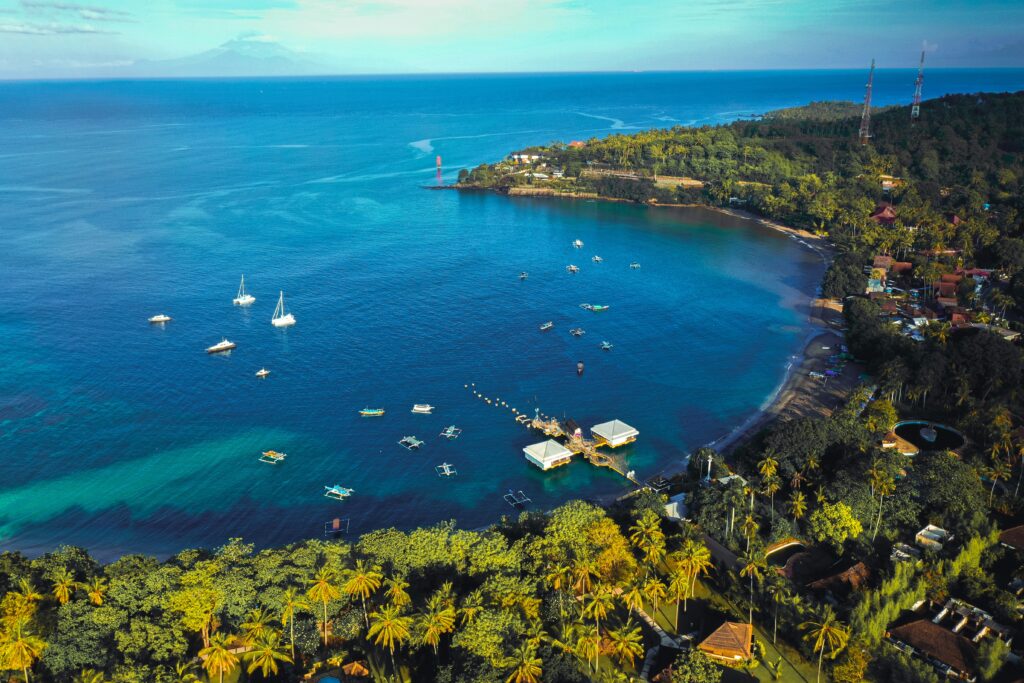
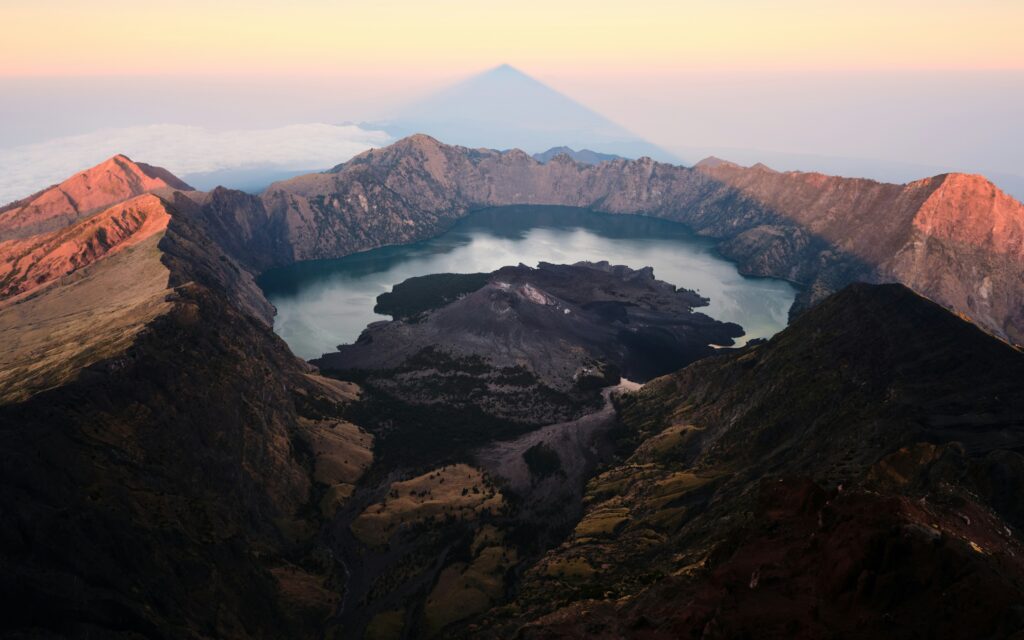
Lombok, often referred to as Bali’s quieter sister, offers pristine beaches, waterfalls, cultural experiences, and the iconic Mount Rinjani. It’s perfect for travelers seeking both adventure and relaxation.
Top Attractions & Experiences:
- Mount Rinjani Trekking:
- Second-highest volcano in Indonesia (3,726 m).
- Trek 2–3 days to reach the crater lake (Segara Anak).
- Sunrise view from the summit is breathtaking.
- Consider guided tours for safety and camping support.
- Senggigi Beach:
- Ideal for swimming, sunbathing, and beachside cafes.
- Sunset photography is spectacular with Mount Agung visible on Bali in the distance.
- Gili Islands (Trawangan, Meno, Air):
- Snorkeling, diving, and turtle spotting.
- Car-free islands; explore via bicycle or horse-drawn carts (cidomo).
- Vibrant nightlife on Gili Trawangan; tranquil escapes on Gili Meno & Air.
- Tiu Kelep & Sendang Gile Waterfalls:
- Hidden waterfalls surrounded by lush rainforest.
- Trekking paths are scenic; best visited early morning to avoid crowds.
- Selong Belanak & Mawun Beaches:
- Beginner-friendly surfing spots.
- Stunning crescent-shaped white sand beaches, less crowded than Bali.
Cultural & Historical Insights:
- Lombok is predominantly Sasak culture with unique traditions, weaving, and ceremonies.
- Sade Village: Traditional Sasak village showcasing indigenous architecture and weaving practices.
- Local ceremonies like Bau Nyale celebrate sea worms and local myths.
Local Cuisine:
- Sate Rembiga: Spicy grilled beef skewers.
- Ayam Taliwang: Spicy grilled chicken with local chili sauce.
- Plecing Kangkung: Water spinach salad with chili and shrimp paste.
- Fresh seafood along Senggigi & Gili islands.
Accommodation Options:
- Budget: Hostels & homestays ($10–$30/night)
- Mid-range: Beachfront resorts and boutique hotels ($50–$120/night)
- Luxury: Private villas, eco-resorts near Gili islands ($200+/night)
Travel Tips:
- Best season: May–September (dry season).
- Transportation: Rent scooters for mainland Lombok; bicycles & cidomo for Gili Islands.
- Photography Tips: Sunrise on Mount Rinjani, sunsets at Senggigi, underwater photography at Gili Islands.
- Sustainable Tourism: Avoid littering on beaches, respect local traditions in Sasak villages.
6. Bandung – The City of Cool.
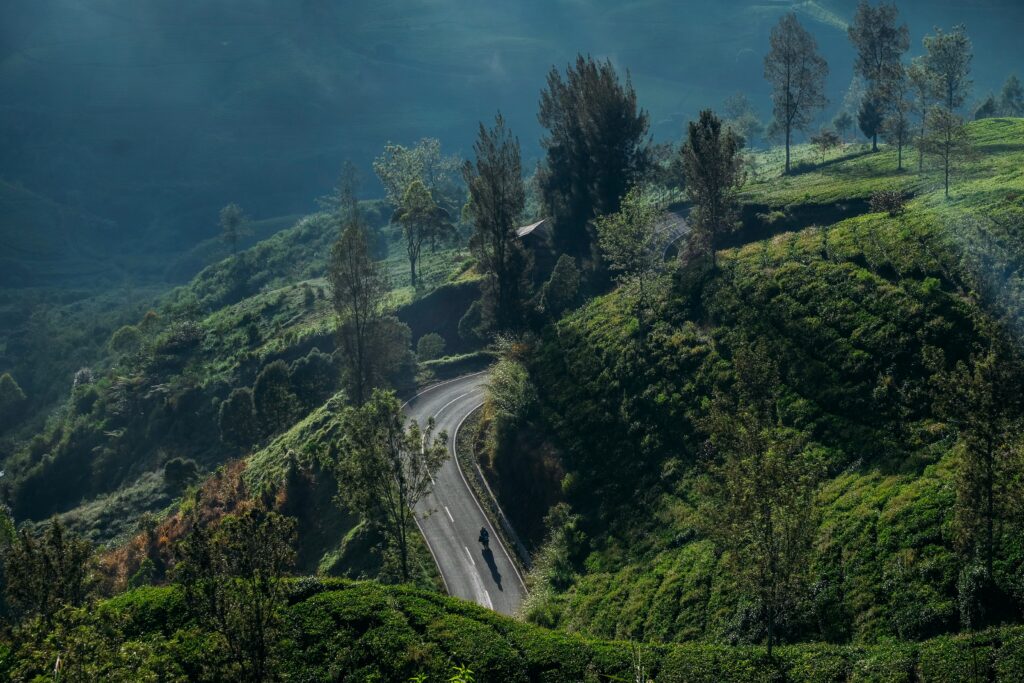
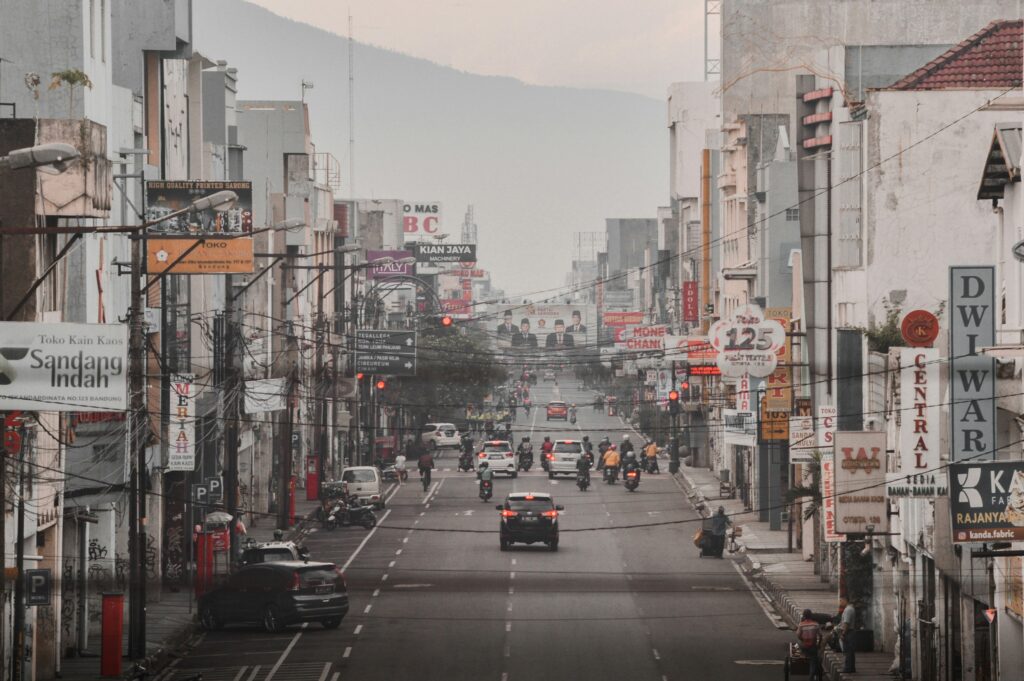
Bandung, the capital of West Java, is famous for cool climate, volcanoes, tea plantations, shopping, and culinary delights. It’s a perfect destination for families, food lovers, and adventure seekers.
Top Attractions & Experiences:
- Tangkuban Perahu Volcano:
- Accessible via car or motorbike; short walks to craters with sulfur vents.
- Historical significance: volcano connected to Sundanese legend of Sangkuriang.
- Kawah Putih (White Crater Lake):
- Stunning turquoise volcanic lake surrounded by sulfuric white soil.
- Misty morning visits create mystical photography opportunities.
- Floating Market Lembang:
- Traditional food & souvenirs sold from boats in a scenic lake setting.
- Ideal for family visits and culinary exploration.
- Tea Plantations (Ciwidey & Pangalengan):
- Scenic walks among lush tea fields; learn tea production processes.
- Photography: Rolling hills, misty mornings, and local farmers at work.
- Farmhouse Lembang:
- European-inspired architecture and photo spots.
- Great for children and tourists interested in themed attractions.
- Shopping & Factory Outlets:
- Famous for fashion bargains and local handicrafts.
Cultural & Historical Insights:
- Bandung has Dutch colonial history, reflected in architecture and street layouts.
- Local art and music scenes thrive in cafes and cultural centers.
- Traditional Sundanese culture is present in performances and culinary offerings.
Local Cuisine:
- Batagor & Siomay: Fried dumplings served with peanut sauce.
- Mie Kocok: Beef noodle soup with unique Bandung spices.
- Peuyeum: Fermented cassava, traditional Sundanese snack.
- Street food tours around Braga Street and Dago are popular.
Accommodation Options:
- Budget: Hostels & guesthouses ($15–$30/night)
- Mid-range: Boutique hotels in Lembang or city center ($50–$100/night)
- Luxury: Resorts with volcano or lake views ($150+/night)
Travel Tips:
- Best season: May–September (dry, less foggy)
- Transportation: Rent a car or join guided tours for sightseeing around Lembang and Ciwidey.
- Photography Tips: Misty tea plantations at sunrise, Kawah Putih lake reflections, cityscape of Bandung from Dago hills.
- Sustainable Tourism: Respect local farmers’ fields; avoid littering during hikes.
7. Bromo Tengger Semeru National Park – Dramatic Landscapes.
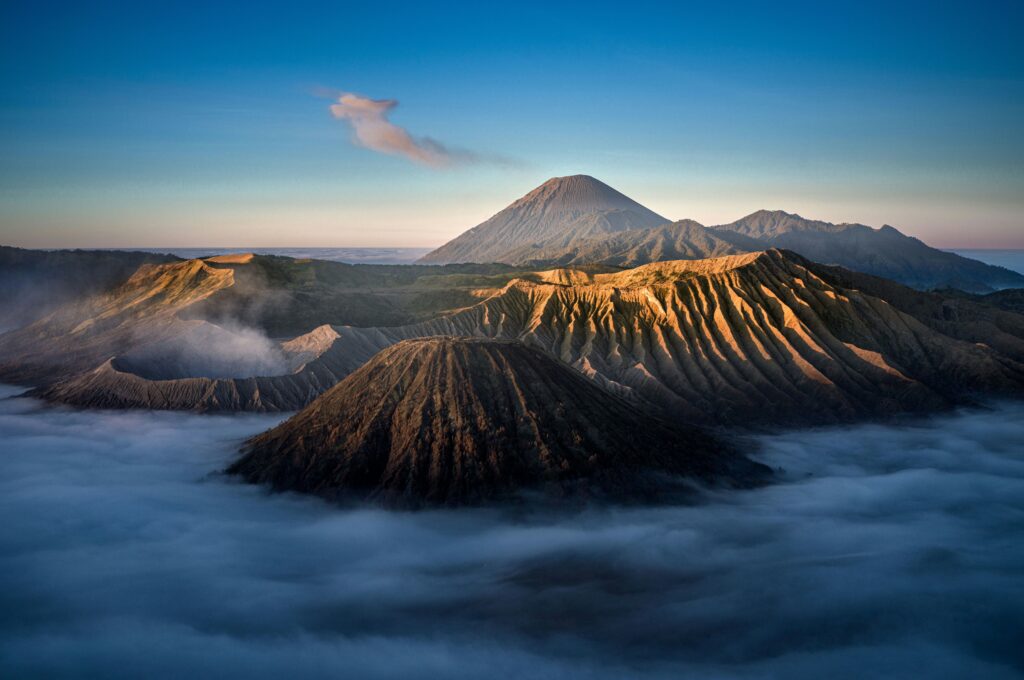
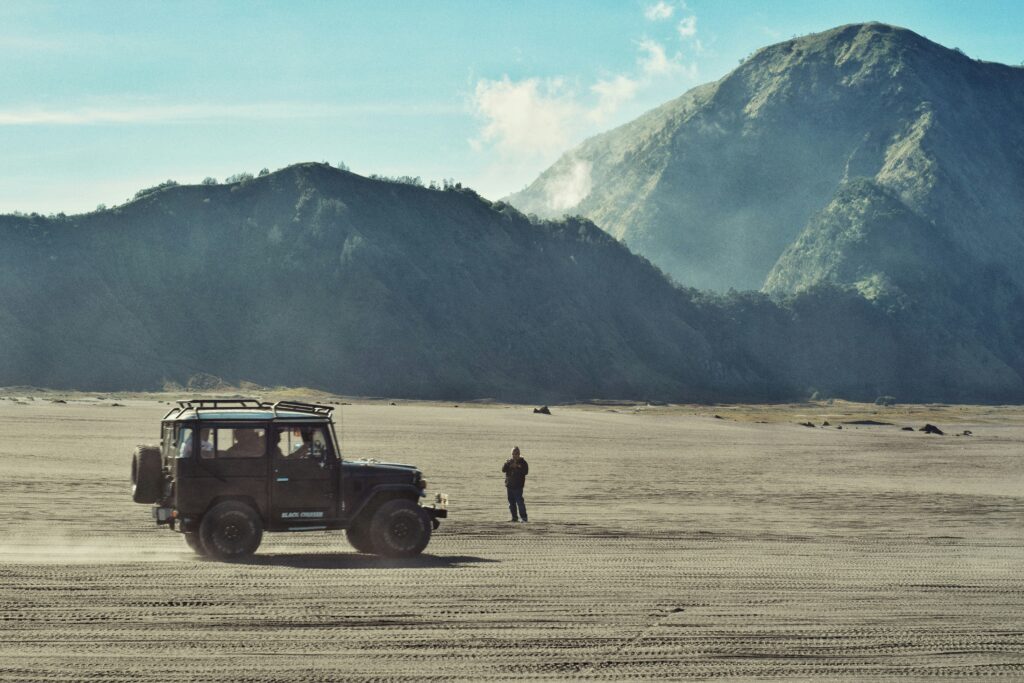
Bromo Tengger Semeru National Park in East Java is one of Indonesia’s most iconic volcanic landscapes, attracting nature lovers, photographers, and adventure seekers.
Top Attractions & Experiences:
- Mount Bromo Sunrise Tour:
- Depart around 3 AM for jeep tours from Cemoro Lawang village to catch sunrise over Mount Bromo.
- Dramatic fog and light create perfect photography opportunities.
- Sand Sea (Laut Pasir):
- Expansive volcanic desert around Bromo, ideal for walking, ATV rides, and photography.
- Mount Semeru Trekking:
- Indonesia’s highest volcano (3,676 m).
- Multi-day trek includes Ranu Kumbolo Lake campsite and sunrise at the summit.
- Recommended for experienced hikers; guided tours provide safety and support.
- Madakaripura Waterfall:
- 200-meter waterfall near Bromo; accessible via scenic jungle trekking.
- Offers refreshing swim and photography opportunities.
- Cultural Insights:
- The Tenggerese people, a Hindu minority in predominantly Muslim East Java, preserve unique traditions.
- Kasada Festival: Annual ceremony where offerings (rice, livestock, vegetables) are thrown into Mount Bromo’s crater to honor ancestral spirits.
- Hidden Gems:
- Cemoro Lawang: Small village with traditional homestays and stunning viewpoints.
- Savanna Fields: Less crowded areas with golden grasslands perfect for landscape photography.
Local Cuisine:
- Jagung Bose: Corn cooked with coconut milk and spices.
- Tenggerese Goat Satay: Grilled skewers with local spices.
- Snacks sold by vendors near viewpoints include fried bananas and sweet cassava.
Accommodation Options:
- Budget: Homestays in Cemoro Lawang ($10–$25/night)
- Mid-range: Guesthouses with volcano views ($30–$70/night)
- Luxury: Boutique resorts with guided tour packages ($100+/night)
Travel Tips:
- Best season: April–October (dry season; avoid heavy fog and rain)
- Transportation: Jeep tours, motorcycles, or guided trekking.
- Photography Tip: Sunrise over Bromo with Mount Semeru in the background, Milky Way night photography in sand sea.
- Sustainable Tourism: Respect Tenggerese sacred sites; avoid littering in volcanic areas.