Origin: Korea
Servings: 4–6
Prep Time: 30 minutes
Fermentation Time: 1–2 days at room temperature + refrigerate
Difficulty: Medium
History of Kimchi
Kimchi is Korea’s most iconic fermented food, known for its spicy, tangy, and umami flavors. The history of kimchi dates back over a thousand years, originally created as a way to preserve vegetables during harsh winters. Early versions were simple salted vegetables, but over time, Koreans developed a variety of kimchi styles, adding chili, garlic, ginger, and fermented seafood for depth of flavor.
Traditionally, kimchi was a staple in every Korean household, with families preparing large quantities during “Kimjang”, the annual communal kimchi-making season. Today, kimchi is enjoyed worldwide, praised not only for its taste but also for its health benefits as a probiotic-rich food that supports digestion and immunity.
About the Dish
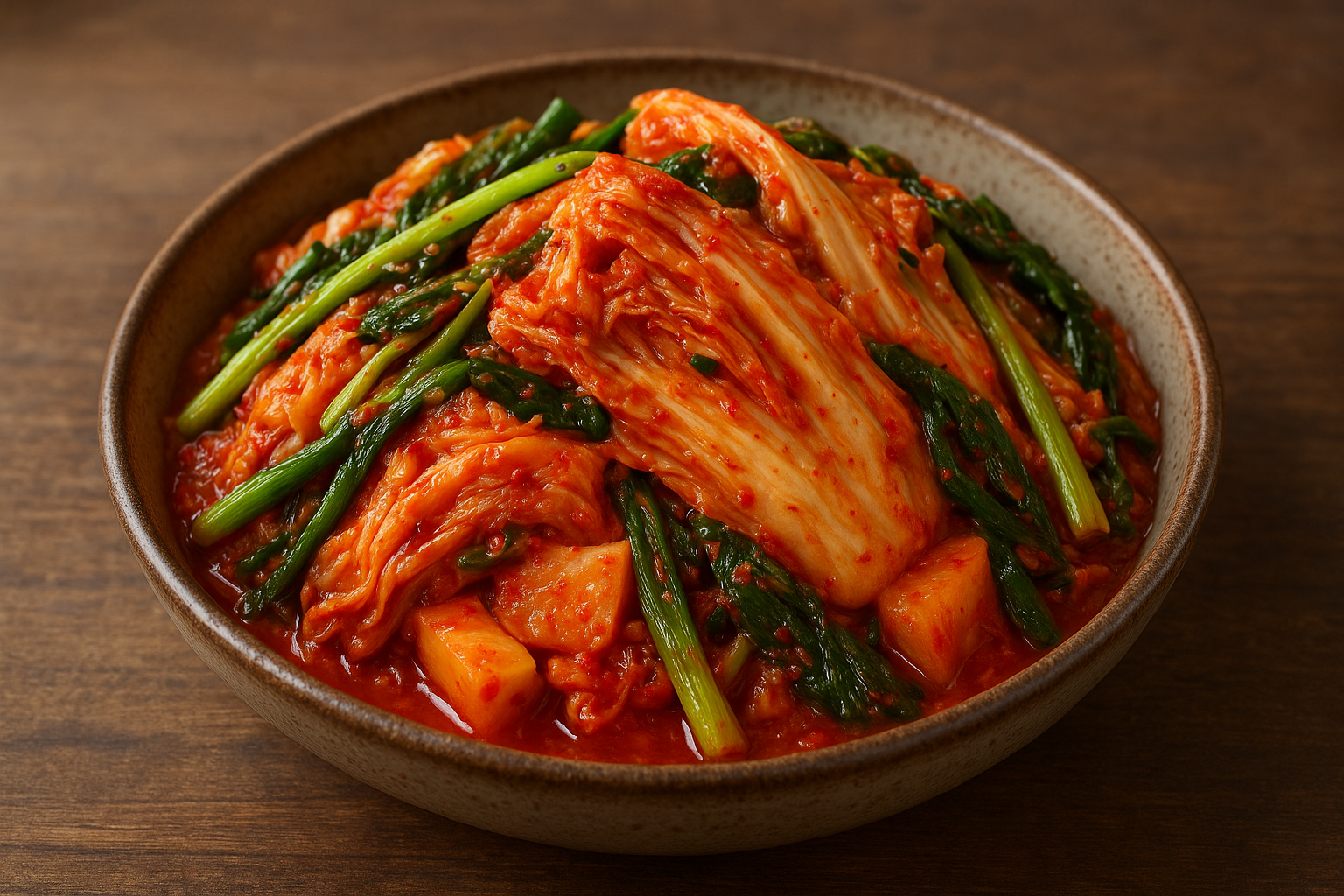
Kimchi is a fermented vegetable dish that balances heat, tanginess, and savory depth. At its core, it’s made from napa cabbage or radishes, salted to draw out moisture, and coated with a spicy, flavorful paste of chili powder, garlic, ginger, and fish sauce.
What makes kimchi unique is its fermentation process. Unlike pickles that are quickly preserved in vinegar, kimchi develops complex flavors over time as natural bacteria transform sugars in the vegetables into lactic acid. Each bite is crisp, tangy, and slightly effervescent—a living food that evolves with every day in your fridge.
Kimchi is versatile: it can be eaten as a side dish, incorporated into soups like kimchi jjigae, stir-fried with rice, or even used in pancakes and stews. Its bold flavor complements a wide range of dishes and cuisines.
Ingredients
- 1 medium napa cabbage
- 1/4 cup sea salt (for brining)
- 4 cups water
- 2 tablespoons rice flour (optional, for paste)
- 1 tablespoon sugar
- 1/4 cup Korean red chili powder (gochugaru)
- 4–5 garlic cloves, minced
- 1-inch piece ginger, minced
- 3 green onions, chopped
- 1 small carrot, julienned
- 2 tablespoons fish sauce (or soy sauce for vegetarian version)
Instructions – Step by Step
Step 1: Prepare the Cabbage
- Cut the napa cabbage into quarters lengthwise and remove the core.
- Dissolve 1/4 cup sea salt in 4 cups water. Soak the cabbage quarters in this saltwater for 1–2 hours. Turn the cabbage occasionally so that all layers are evenly salted.
- After soaking, rinse each cabbage quarter thoroughly under cold running water to remove excess salt.
- Squeeze gently to remove extra water. Set aside.
Step 2: Make the Rice Paste (Optional but Recommended)
- Mix 2 tablespoons rice flour with 1/2 cup water in a small saucepan.
- Heat over medium flame, stirring constantly until it thickens into a paste.
- Add 1 tablespoon sugar to the paste and stir until dissolved.
- Let the paste cool to room temperature before adding it to the seasoning mix.
Step 3: Prepare the Seasoning
- In a mixing bowl, combine:
- Minced garlic
- Minced ginger
- Chopped green onions
- Julienne carrot
- 1/4 cup Korean red chili powder (gochugaru)
- 2 tablespoons fish sauce (or soy sauce)
- Cooled rice paste (if using)
- Mix thoroughly until it forms a thick, even paste.
Step 4: Coat the Cabbage
- Put on gloves to avoid staining your hands.
- Take one cabbage quarter at a time and rub the seasoning paste between each leaf, making sure every leaf is coated.
- Press the seasoned cabbage firmly into an airtight jar or container. Pack tightly to remove air pockets.
Step 5: Fermentation
- Leave the jar at room temperature for 1–2 days. This starts the fermentation process.
- Check daily: kimchi is ready when it has a tangy, slightly sour flavor.
- Once the desired taste is achieved, transfer the kimchi to the refrigerator. It will continue to ferment slowly and can last for several weeks.
Serving Suggestions
- Eat as a side dish with steamed rice or Korean meals like bulgogi or bibimbap.
- Stir-fry with rice to make kimchi fried rice.
- Use in soups such as kimchi jjigae.
- Add to pancakes, noodles, or tacos for extra flavor.
Tips for Perfect Kimchi
- Wear gloves to protect hands from chili paste.
- Use non-iodized salt to prevent discoloration.
- Adjust chili powder according to your preferred spice level.
- Keep the container airtight to prevent contamination.
- Fermentation time varies depending on room temperature; warmer environments speed up fermentation.
Variations
- Baechu Kimchi – Classic napa cabbage kimchi
- Kkakdugi – Cubed radish kimchi
- Oi Sobagi – Stuffed cucumber kimchi
- Vegetarian Kimchi – Replace fish sauce with soy sauce
Cultural Significance
Kimchi is a cornerstone of Korean cuisine and culture. Families prepare it together during Kimjang, passing down recipes and techniques through generations. It symbolizes community, tradition, and creativity in preserving food.
As the Koreans say:
“김치 없인 밥도 못 먹는다.”
(“You can’t eat rice without kimchi.”)
Kimchi isn’t just a dish it’s a living part of Korean heritage, celebrated worldwide for its flavor, health benefits, and cultural depth.