Saving money doesn’t have to be complicated or stressful. With small steps, realistic budgets, and smart tools, you can take control of your finances even if your income isn’t huge.
This guide is for students, freelancers, young professionals, or anyone who wants to save without sacrificing life’s fun.
1: Know Where Your Money Goes
Before you can save, you need to see exactly where your money is going. Many people lose money on small, unnoticed expenses.
Typical monthly spending (USD, global average):
| Category | % of Income | Notes |
|---|---|---|
| Rent / Housing | 30–40% | Biggest expense for most people |
| Groceries | 15–20% | Cooking at home + occasional eating out |
| Utilities & Internet | 5–10% | Electricity, water, internet, phone |
| Hobbies & Leisure | 10–15% | Gym, hobbies, movies, personal growth |
| Transport | 5–8% | Public transport, fuel, ride-hailing |
| Dining & Coffee Out | 5–10% | Weekend treats |
| Subscriptions | 2–5% | Netflix, Spotify, apps |
| Savings & Emergency Fund | 5–15% | Automated savings or investments |
| Misc / Unexpected | 5–10% | Gifts, emergencies, small splurges |
Tip: Track every dollar for one month. Apps like YNAB, PocketGuard, or Revolut make it painless.
2: Make a Realistic Monthly Budget
Here’s a practical, realistic budget for someone earning $2,500/month, with more emphasis on hobbies and leisure:
| Category | Amount (USD) | Notes |
|---|---|---|
| Rent / Housing | $900 | Shared apartment or small studio |
| Groceries | $350 | Home-cooked meals most days |
| Utilities & Internet | $150 | Electricity, water, internet, phone |
| Hobbies & Leisure | $300 | Gym, hobbies, classes, movies, personal growth |
| Transport | $150 | Public transport + occasional ride-hailing |
| Dining & Coffee Out | $150 | Weekend meals or treats |
| Subscriptions | $50 | Netflix, Spotify, apps |
| Savings & Emergency Fund | $300 | Automated savings or micro-investing |
| Misc / Unexpected | $150 | Gifts, emergencies, small purchases |
- Savings remain realistic $300/month → $3,600/year
- More money for hobbies & leisure balances life and well-being
- Misc category handles unexpected expenses
Extra tip: Track spending weekly to spot leaks early.
3: Automate Your Savings
Manual saving is hard we forget or give in to impulse. Automation makes it effortless:
- Save $5–$10 per week → $250–$500/year
- Use apps or banks: Revolut, Monzo, N26, Chime
- Try features like:
- Round-up savings: Buy $3.60 → $0.40 automatically saved
- Auto-goals: Transfer a fixed amount every month
Fun idea: Treat automation as a “set-it-and-forget-it” game and watch your savings grow.
4: Cut Costs Without Feeling Pain
Saving money doesn’t have to be boring or stressful. You don’t need to give up fun just make small, smart changes.
Think of it like plugging holes in a leaking bucket: each tiny fix saves a surprising amount over time!
Everyday Swaps That Add Up
| What You Spend | Easy Swap | Save This Much |
|---|---|---|
| Coffee to-go: $4/day | Brew at home for $0.50/day | $70/month → $840/year |
| Food delivery: $10/meal, 2x/week | Cook extra meals at home | $80/month → $960/year |
| Ride-hailing: $10/trip, 5x/week | Public transport / carpool | $150/month → $1,800/year |
| Subscriptions: $15/month | Keep only essentials | $10/month → $120/year |
Quick Breakdown
1. Coffee at home
- Buying coffee every weekday = $4 × 5 × 4 weeks ≈ $80/month
- Brew at home = $0.50 × 5 × 4 weeks ≈ $10/month
- You save $70/month enough for a small weekend trip every year!
2. Food delivery
- Ordering twice a week = $10 × 2 × 4 = $80/month
- Cook at home instead = $0 extra
- Save $80/month over $900 a year!
3. Ride-hailing
- $10/trip × 5 trips × 4 weeks = $200/month
- Public transport or carpool ≈ $50/month
- Save $150/month, or $1,800/year that could pay a few months of your rent!
4. Subscriptions
- $15/month for services you don’t fully use
- Keep only what matters = save $10/month → $120/year
Mini Challenge: “30-Day Coffee Freeze”
- Brew your coffee at home for 30 days.
- Take the $70 you would have spent and put it straight into savings.
- Try adding other swaps too like food delivery or subscriptions.
Result: Over $1,000 saved in a year without feeling deprived!
5: Boost Your Income
Saving is important, but earning more helps too:
- Freelance online (writing, design, tutoring)
- Sell unused items online
- Part-time work or microtasks
Even $100–$200 extra/month accelerates your savings without major effort.
6: Build an Emergency Fund
Unexpected expenses break budgets. Protect yourself:
- Start small: $500–$1,000
- Keep in a separate high-yield account
- Only use for true emergencies
Example: Phone repair = $200. With a $500 emergency fund, you’re covered.
7: Use Smart Apps & Tools
Apps make saving automatic, visual, and stress-free:
| App | Category | Why It Works |
|---|---|---|
| YNAB | Budgeting | Tracks every dollar |
| PocketGuard | Expense tracking | Shows leaks |
| Revolut | Auto-saving | Round-ups & goals |
| Monzo | Money tracking | Alerts & insights |
| Acorns / Stash | Micro-investing | Invest spare change |
Extra tip: Use apps with multi-currency support if you travel or earn internationally.
8: Make Saving Fun
Gamify your saving:
- Add $1 extra weekly and track progress
- Compete with friends in mini challenges
- Reward yourself when you reach milestones
Extra: Use a “saving streak calendar” it keeps you motivated.
9: Set Clear, Motivating Goals
Saving without a goal is like running without a finish line.
When you have a purpose, you stay motivated.
Examples:
- Emergency Fund: Aim for 3–6 months of living expenses.
- Vacation Fund: Plan how much you need and divide by months until your trip.
- Freedom Fund: Save for education, investments, or early retirement.
Saving is easier when you have a purpose.
Decide what you’re saving for an emergency fund, vacation, education, or a down payment.
SMART Goals Example:
- “I want to save $1,000 in 6 months.”
This gives you direction, motivation, and a way to measure progress.
Write your goals down, or visualize them.
It’s easier to say “no” to impulse spending when you’re saying “yes” to your dreams.
10: Mindset Small Wins = Big Freedom
- Saving isn’t about deprivation it’s control over your money
- Less stress during emergencies
- Freedom to choose what matters
- Gradual financial security
💬 “Even $20/week adds up. Focus on realistic, consistent wins not perfection.”
Bonus Tips
- Micro-investing: $1–$5/day in ETFs or index funds
- Grocery hacks: Buy in bulk, freeze meals, compare prices
- Energy efficiency: Reduce electricity/water bills → $20–$50/month
- Debt management: Pay high-interest debt first
- Lifestyle swaps: Free workouts, online courses, hobbies
- Financial journaling: Track wins and celebrate progress
Final Thoughts: Save Smart, Live Well
Saving money isn’t about giving up fun, it’s about making your money work for you.
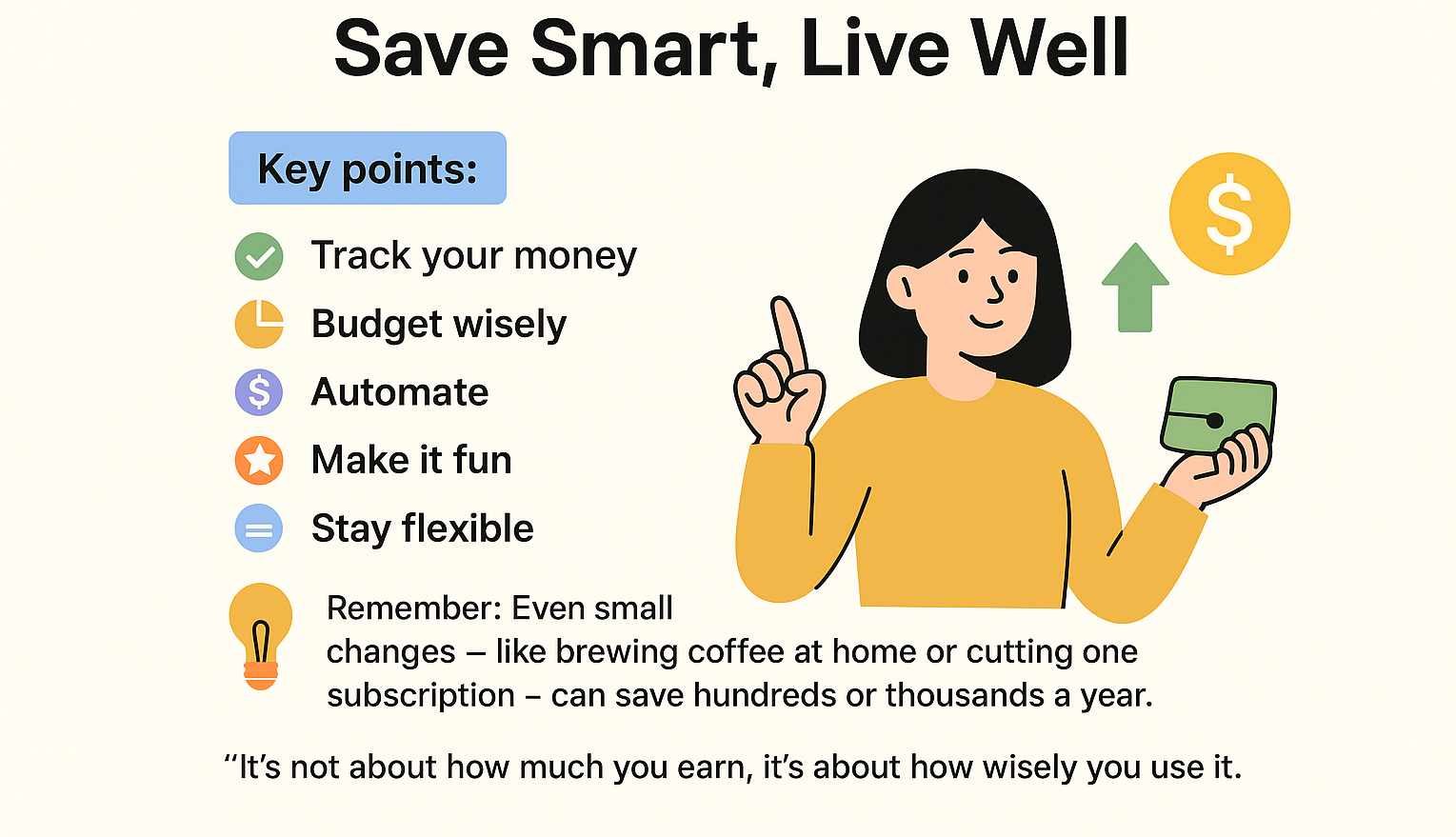
- Track your money: Know where every dollar goes.
- Budget wisely: Balance savings, essentials, and hobbies.
- Automate: Let apps handle saving for you.
- Make it fun: Challenge yourself and celebrate small wins.
- Stay flexible: Adjust your plan as life changes.
Remember: Even small changes like brewing coffee at home or cutting one subscription can save hundreds or thousands a year.
Start today, take control, and enjoy the freedom that comes from smart saving.
💬 “It’s not about how much you earn, it’s about how wisely you use it.”